|
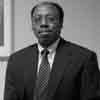
Since 1993, Dr. Johnny Washington has been on the faculty
at Missouri State University (MSU) in Springfield, Missouri
(USA). He was hired to establish the University’s first
Program in African American Studies. Between 1995 to 2001,
he served as the Program’s director. He also serves
as a media consultant on civil rights and social justice issues.
Additionally at MSU he is a professor of Philosophy and Professor
of African American Studies. After receiving a B.A. degree
in Philosophy from Saint Xavier University in Chicago, Dr.
Washington then went on to earn an M.A. as well as a Ph.D.
degree in Philosophy from Stanford University. Since beginning
his academic career in the late 1970s, he has researched the
works of the African American philosopher-educator Dr. Alain
Locke. Dr. Washington’s research has resulted in the
publication of three books as well as a video documentary:
i) Alain Locke and Philosophy: A Quest for Cultural Pluralism
(1986); ii) A Journey into the Philosophy (1994); iii) Evolution,
History and Destiny: Letters to Alain Locke (1886-1954) and
Others (2003); and, iv) Destiny: the Ideal of Unity (1999),
respectively.
In the last two-mentioned works, Dr Washington elaborated
on the notion of Destiny that he defines in the following
manner. “It is an ideal of transcendent unity towards
which a people strives in successive generations.” Dr.
Washington has explored the idea of Destiny since he was a
child, during the Civil Rights era. It was during this era
that he often heard “Destiny” used by individuals
such as Dr. Martin Luther King, Jr., Malcolm X, and subsequently
by members of the Black Panther Party. But according to Dr.
Washington such activists rarely, if ever, defined Destiny.
Thus he felt that African Americans could be more effective
in their social justice struggle if they had a clearer meaning
of Destiny by means of which they could become more resolute
in the individual or collective purpose.
Over the years Dr. Washington has traveled abroad to areas
such as: Tokyo, Japan; Saigon, Vietnam; Bangkok, Thailand;
Merida, Mexico; Toronto, Canada; Nairobi, Kenya; Dakar, Senegal;
Tegucigalpa, Honduras; Managua, Nicaragua; Ahmedabad, India;
Lagos, Nigeria; and San Jose, Costa Rica. Traveling overseas
allowed Dr. Washington to discern the Destiny aspirations
not only of the people in the U.S. but in other regions of
the world, including Central America, Asia and Africa.
Dr. Washington’s Destiny research has enabled him to
formulate what he called the Destiny/Destinicity model that
he defined thus: “It is an approach that allows people
to concentrate on their past, present, and future possibilities,
and to regard experience as a coherent unity, rather than
a set of fragmented historical happenings.” In this
context, he also offers a definition of his novel notion “Destinicity,”
according to which it is a “synthesis of ‘destiny’
and ‘ethnicity’ thereby grounding the destiny
of people within their respective ethnic, tribal or local
cultural experiences” and capturing the “creative
spirit that informs their group identities.”
Dr. Washington is now conducting discussion groups which focus
on topics such as “Destinicity,” “Freedom,”
“Self-Esteem,” “Transcendence,” and
“What is the Destiny of this Generation of Youths?”
The discussion group approach is an attempt to allow the Destiny
model to achieve social significance or practical import in
that people will be able to engage in collective discourse
in examining issues or problems in their lives. The running
out of fossil fuel or the excessive erosion of top-soil is
an illustration of a collective problem that the Destiny model
may provide a forum for addressing.
Moreover as an organ the Destiny model can provide people
social or moral space to generate individual or collective
narratives that will in part bestow meaning on their lives.
The model under discussion is self-efficacious. “In
the spirit of Science of Complexity that is paradigmatic of
the Postmodern era, I seek to draw attention to the ontological
status of cultural, religious, and ethnic minorities, to the
diverse voices they represent” Dr. Washington said.
He urges people to develop a sense of tolerance in dealing
with racial problems. He thinks that we might be effective
in making this practical, if each ethnic or cultural group
begins to regard itself as sharing transcendent Destiny with
every other ethnic or cultural group.
One of Dr. Washington’s goals is to establish a Destiny
studies program at MSU that moves beyond the afro-centric
curriculum and the multicultural curriculum of ethnic-specific
courses. He hopes that participation in the study group sessions
regarding the Destiny model will ultimately extend to the
community by presenting the Destiny model to high schools,
civic and political organizations. “As we approach the
21st century, the destiny model will offer a ray of hope for
this century and beyond.”
|